


1. The Myth of the "Flawless" New Car
There is an unmatched thrill in purchasing a brand-new vehicle. In India, the delivery of a new car is treated as a major family milestone, complete with auspicious dates, decorative ribbons, a box of sweets, and the celebratory popping of confetti. The dealership showroom is designed to amplify this sensory experience. Under the flattering glow of high-CRI halogen spotlights, with clean marble flooring reflecting the car's flawless coat, and the signature "new car smell" wafting through the cabin, buyers naturally slip into a state of excitement.
This excitement creates a powerful cognitive bias: the assumption that a brand-new car is automatically perfect. Buyers believe that because a vehicle has zero owners, has traveled less than 50 kilometers, and has just arrived from a multi-billion dollar manufacturing facility, it is impossible for it to possess any mechanical, electrical, or structural defects.
Unfortunately, as a mechanical engineer who has spent years analyzing automotive quality gates and dealership workflows, I must shatter this illusion. A modern passenger vehicle is a complex machine consisting of roughly 30,000 individual parts. It is assembled by a mix of high-speed automation and human operators, subjected to long-distance transport on multi-level car carriers over rough road networks, and stored for weeks or even months in open-air holding yards. At any point in this journey—from the factory assembly line to the showroom floor—things can, and do, go wrong.
Dealers count on your excitement to gloss over these discrepancies. They speed up the handover process, hand you a pen to sign forms while the car is parked in a dark delivery bay, and assure you that "everything is perfect." By the time you spot a repainted door, a cracked bumper, or a faulty sensor, you have already driven off the lot. An independent, professional Pre-Delivery Inspection (PDI) is your only line of defense against receiving a compromised vehicle.
2. What is a Pre-Delivery Inspection (PDI)?
In theory, a Pre-Delivery Inspection (PDI) is a systematic check performed on a vehicle before it is handed over to the final customer. It is designed to ensure that the car is in perfect roadworthy condition, free from manufacturing errors, transportation damages, or storage-related degradation.
To understand the importance of a PDI, we must first break down the three distinct quality control gates in a car's journey:
- Factory Quality Control (QC): Performed at the manufacturer's plant. These are highly structured automated checks and rolling-road dyno tests. However, factory QC is built around assembly line speeds (often yielding one completed car every 60 seconds). Fast-cycle times mean subtle cosmetic variations, loose harness routings, or minute trim misalignments frequently slip past quality inspectors.
- Dealer Pre-Delivery Inspection: Performed by the dealership’s service department before vehicle allocation. In an ideal world, dealership technicians would spend hours going over a 150-point list. In reality, dealership service bays are run as profit centers. Technicians are paid flat rates and pressured to process volume. A dealer PDI is often reduced to a quick exterior wash, interior vacuuming, pulling off plastic seat wraps, and ensuring the engine starts.
- Customer-Led / Independent PDI: A comprehensive audit initiated by the buyer, ideally utilizing a certified third-party specialist. This is conducted at the dealership's stockyard or showroom prior to vehicle registration. It employs specialized diagnostic tools such as digital coating thickness gauges, OBD2 diagnostic scanners, and battery load testers to verify the true state of the vehicle without bias.
Dealerships operate on tight margins. When a vehicle sustains minor transit damage (such as a scraped door or cracked plastic trim) during transport, sending it back to the factory is financially crippling. Instead, the dealer’s internal body shop quietly repairs and repaints the damaged area. A dealer-conducted PDI will never report these touch-ups to you. Only an independent auditor representing the buyer will flag them.
3. The Harsh Reality of Dealer Yards and Storage Depots
When vehicles leave the assembly plants of Maruti Suzuki, Hyundai, Tata, or Mahindra, they do not arrive directly at the shiny glass showrooms. Instead, they are transported to regional holding yards and dealer depots. These storage yards are typically located in remote, unpaved industrial zones on the outskirts of major cities.
Cars can sit in these holding depots for anywhere from 15 days to over 4 months, depending on dealer inventory levels, variant demand, and transport logistics. During this storage period, the vehicles are subjected to harsh conditions that can lead to rapid deterioration:
A. Environmental & UV Damage
Indian summers are brutal. Holding yards almost never have overhead shade. Brand-new vehicles are left parked under direct sunlight in temperatures exceeding 42°C (which translates to interior cabin temperatures of 70°C+). This intense thermal cycles bake the clear coat, degrade rubber beadings, and cause dashboard plastics to outgas, which degrades adhesives and leaves a sticky residue on cabin windows. Acidic bird droppings, tree sap, and industrial chemical fallouts left uncleaned on the paintwork for weeks will chemically etch the clear coat, leaving permanent circular stains that cannot be polished out.
B. Severe Battery Degradation (Lead Sulfation)
Modern passenger vehicles are mobile computers. Even when the engine is completely turned off, electronic control units (ECUs), keyless entry systems, security modules, and telematics systems draw a continuous parasitic current from the battery. If a car sits in a yard for 60 days without being driven, the battery drains to deep-discharge levels (dropping below 11.5 volts).
When a lead-acid battery remains in a deep-discharge state, a chemical process called lead sulfation occurs. Active chemical materials on the internal lead plates convert into hard lead sulfate crystals. This permanently reduces the battery's chemical capacity, cold-cranking amps (CCA), and ability to hold a charge. Before delivering the car, the dealer simply jump-starts the vehicle or uses a quick-charger. The engine fires up, and the buyer drives home, unaware that their "brand-new" battery has already lost 50% of its designed service life and is bound to fail within a year.
C. Rodent Infestation
Since depot yards are unpaved, grassy, open areas, they are heavily infested with rats and field mice. Warm engine bays of recently parked cars provide perfect shelter for rodents. To make matters worse, modern automotive manufacturers use biodegradable, soy-based insulation wraps for wiring harnesses to meet green standards. Rodents find this soy insulation tasty and chew through critical wiring bundles. This causes intermittent short-circuits, blown fuses, and random ECU communication failures that are notoriously difficult to diagnose.
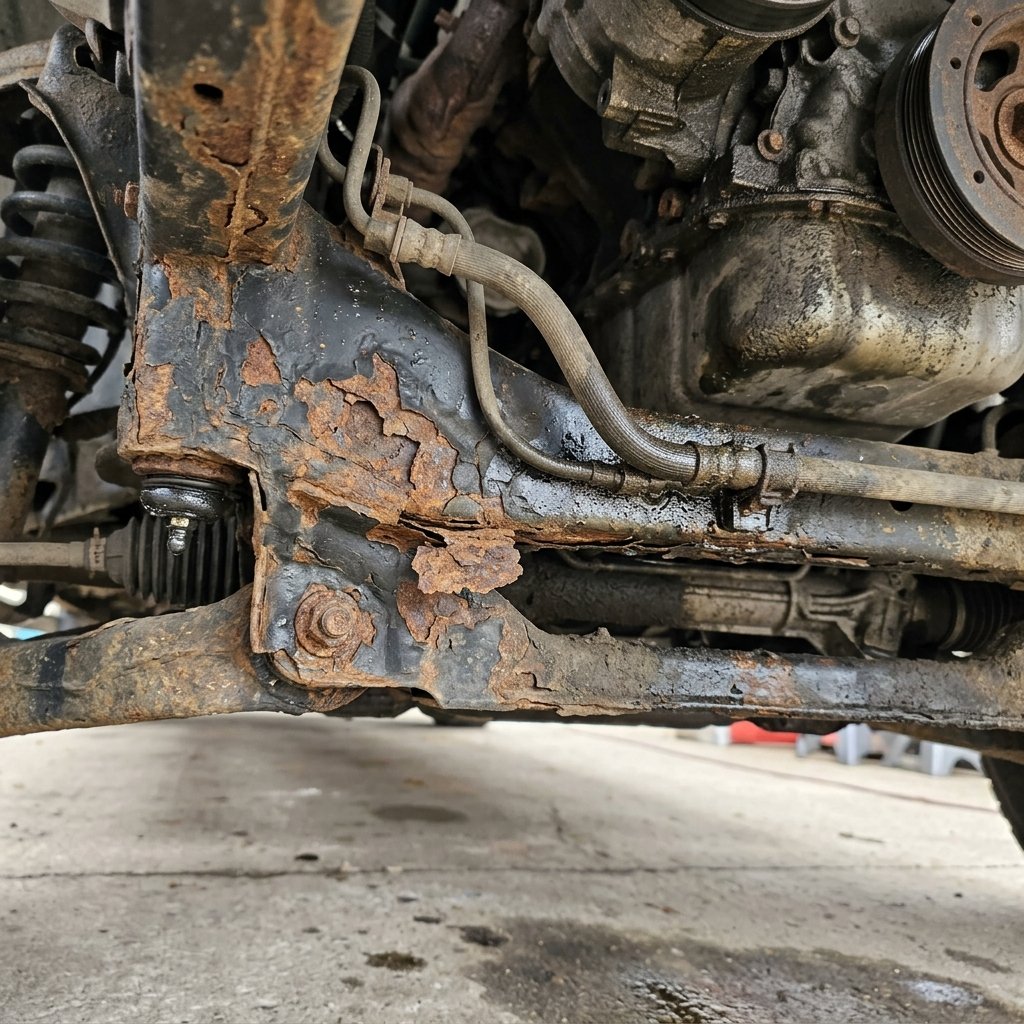
Infographic: The Storage Depot Degradation Loop
A breakdown of how unshaded storage yards degrade battery health, tire compound structural integrity, clear coat paint layers, and wiring harnesses prior to customer delivery.
D. Tire Flat-Spotting & Suspension Sag
When a car sits in a fixed position for months, the heavy static weight of the vehicle forces a constant load onto one single patch of the tires. Over time, the tire compound undergoes temporary rubber deformation, creating a "flat spot" on the tread. Once the car is driven at highway speeds (80-120 km/h), these flat spots generate noticeable cabin vibrations and steering wheel shudder, mimicking wheel misalignment. In addition, transit block spacers placed in the coil springs at the factory are sometimes left unremoved by dealers, which ruins the ride quality and puts uneven stress on the dampers.
4. Transit Damage: The Journey from Factory to Showroom
The physical journey of a new car from the manufacturing hub to the local dealer is a high-risk logistical operation. Cars are loaded onto double-decker car carrier trucks (transporters). These trucks navigate thousands of kilometers of poorly paved national highways, potholed state roads, and tight toll plazas.
Transit damage commonly arises from several key areas:
- Unloading Ramps and Scraping: Car transporters utilize steep, narrow metal ramps. Low ground-clearance sedans (such as the Honda Civic or Hyundai Verna) and low hatchbacks frequently scrape their front bumpers, underbody engine splash guards, and exhaust mufflers during loading and unloading.
- Tight Squeeze Scratches: Drivers responsible for parking the cars on the transporter decks must squeeze out of tight door apertures. This results in metal belt buckles scraping against door paint, watch bezels gouging side-mirror shells, and shoes scuffing interior leather door cards.
- Highway Stone Debris: Open-car carriers offer zero protection against debris kicked up by trucks traveling in front. Flying gravel on highways causes stone chips on the bonnet, micro-cracks in the windshield, and paint chips along the A-pillars.
- Tie-Down Lash Damage: To prevent cars from rolling inside the carrier, wheels are tied down using heavy-duty ratchet straps. If the straps are over-tightened or rub against the alloy wheel spokes, they scratch the diamond-cut finish or chip the painted alloy surfaces.
When a car carrier arrives at the dealership with damaged vehicles, the dealer is faced with a choice: claim transit insurance and write off the vehicle (a long process that stalls sales volumes), or fix it quietly. Dealers almost always choose the latter. They pull out dents using slide-hammers, apply polyester body filler (putty), repaint the panel in a dusty workshop environment, wet-sand the paint run lines, polish it, and sell it as a pristine "new car" without disclosure.
5. Factory QC Failures: When Assembly Lines Slip Up
While transit and yard storage damages are external logistical issues, many new car problems originate directly from the factory assembly floor. Despite advanced robotic automation, manufacturing defects are increasingly common as factories push production lines to maximum capacity.
Common factory assembly line defects caught during independent PDIs include:
- Panel Gap Variations: A signature indicator of assembly line misalignment. The clearance gaps between the hood and the front fenders, or the doors and the quarter panels, should be uniform (typically measuring between 3.5mm to 4.5mm). Significant panel gap variations (e.g., 6.0mm on the left and 2.5mm on the right) cause high-speed wind whistling, compromise water-tightness, and point to poor sub-frame assembly quality.
- Missing Underbody Fasteners: In the rush to complete assembly steps, factory line workers occasionally miss securing underbody shields or wheel arch liners. Lacking these plastic screw clips, the protective splash guards sag, scrape the road, and allow water and slush to enter the engine compartment.
- Fluid Level Deficiencies: Assembly line fluid dispensers can suffer from calibration drift. We frequently encounter brand-new vehicles delivered with coolant, engine oil, brake oil, or transmission fluid levels resting below the safe minimum line.
- Faulty Interior Switchgear: Sub-component suppliers may ship defective batches of parts. A window regulator motor, an AC dial button back-light, or a steering wheel audio control scroll switch can fail straight out of the box due to bad internal solder joints.
6. The Science of Paint Depth Variation & Repaint Detection
For an automotive inspector, the paint on a vehicle is like a medical report card. The exterior paint finish is the absolute best way to check if a car has suffered panel damage and aftermarket repair.
Factory paint is applied by robotic electrostatic sprayers inside a pressurized cleanroom. The robots spray a highly controlled, micro-level layer of primer, base coat (color), and clear coat (lacquer) onto the steel or aluminum sheet metal. This results in an incredibly thin, uniform, and hard layer.
Understanding Microns
Paint thickness is measured in microns (where 1 micron = 1/1000th of a millimeter). A factory paint job has an average total thickness that remains consistent across all panels:
- Japanese & Korean Brands (Maruti Suzuki, Hyundai, Kia, Honda): Typically feature very thin paint, ranging from 80 to 110 microns.
- Indian Brands (Tata, Mahindra): Show slightly thicker coatings, ranging from 95 to 130 microns.
- German & European Brands (Volkswagen, Skoda, BMW, Audi): Feature robust, thick paint layers, ranging from 110 to 150 microns.
How a Digital Paint Depth Meter Works
Independent inspectors use a high-precision digital Coating Thickness Gauge (often called a paint depth meter). The gauge operates on two physical principles: Magnetic Induction (for ferrous steel panels) and Eddy Current testing (for non-ferrous aluminum panels). By placing the sensor perpendicular to the panel surface, the gauge measures the exact distance from the metal substrate to the outer clear coat.
When a panel is damaged at a dealership and repainted, the repair process is manual. The technician must sand down the factory coat, apply body filler (putty) to smooth out dents, spray primer, and apply base and clear coats using a manual paint gun. This manual application is far thicker than robotic spray.
If a fender or door panel shows a reading of 220 to 350+ microns while the adjacent panels measure 90 microns, it is a definitive repaint flag. The excessive thickness is due to body filler and manual paint layers. Conversely, if a reading is exceptionally thin (less than 50 microns), it indicates that the panel was aggressively dry-sanded or compounded at the dealership to remove a scratch, stripping away the protective clear coat and leaving the paint highly vulnerable to UV peeling.
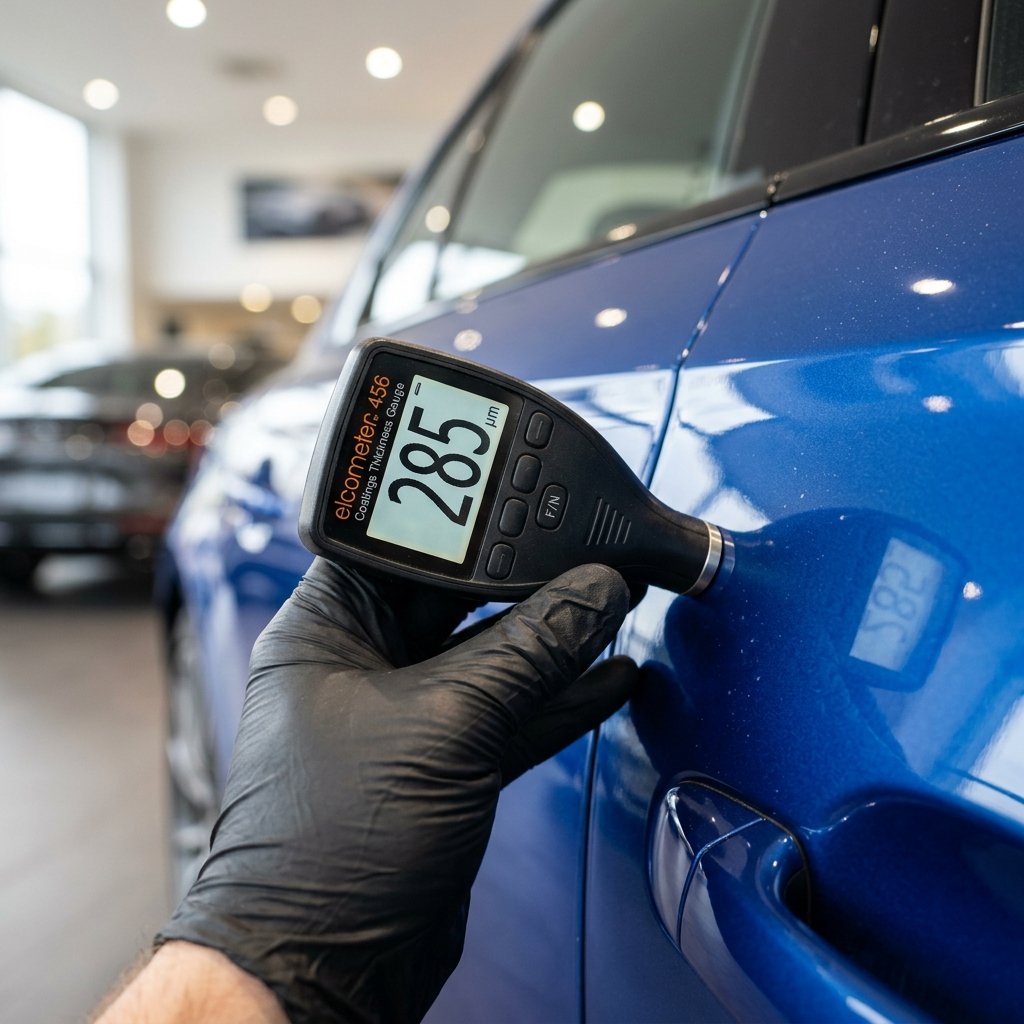
Infographic: Deciphering Paint Depth Gauge Readings
Comparison of factory-perfect paint layer thickness (in microns) vs. aftermarket respray thickness indicating hidden transit repairs.
7. The Legal Trap: Why RTO Registration Changes Everything
Many car buyers assume that if they discover a defect after picking up their vehicle, they can simply return the car to the dealer and ask for a swap or a full refund. This is a massive legal misconception. In the Indian automotive retail framework, there is a clear "point of no return." That point is RTO Registration.
To understand your leverage, you must understand the four commercial steps of buying a new vehicle:
| Stage | Action Taken | Customer Leverage | Dealer Status & Flexibility |
|---|---|---|---|
| 1. Booking / Allocation | Pay token advance; VIN number is allocated. | Maximum. Can cancel booking and receive full refund. | Highly cooperative; eager to lock in the sale. |
| 2. Pre-Registration (PDI Window) | Vehicle is physically present; loan is approved but not disbursed. | High. Can reject the specific chassis number (VIN) if defects are found. | Dealers will swap the vehicle for another unit from the lot to save the deal. |
| 3. RTO Registration | Road tax paid; registration number generated in VAHAN database. | Zero. The vehicle is now legally registered under your name. | Deal is legally final. Dealer will reject any swap or return requests. |
| 4. Showroom Delivery | Ceremonial handover; vehicle driven off dealer premises. | Zero. Redressing issues is now a slow warranty claim. | Will only offer to repair specific parts under warranty guidelines. |
Once the dealer pays the road tax and submits the Form 20 to the Regional Transport Office (RTO), the 17-digit Chassis Number (VIN) is permanently locked to your name in the government VAHAN database. From that exact millisecond, you legally own the car.
If you inspect the car on delivery day and find a repainted bonnet or a damaged gearbox, the dealer will refuse to swap the car. Legally, they cannot do it easily. They would have to cancel the registration, register the vehicle as a used car, pay registration taxes again, and take a massive loss.
Instead, the dealer will say, "Sir, please don't worry. We will replace the faulty part or respray the bumper for free under manufacturer warranty."
But think about the financial and psychological impact. You have just paid ₹15 Lakhs of your hard-earned money for a "new" car, yet it is entering the workshop on day one to have its engine opened or panels repainted. You have paid brand-new pricing for a vehicle that already has repair history and diminished market resale value.
Dealers frequently exploit family sentiments by pushing to register the vehicle before you have seen it. They will say: "Sir, the registration office takes 3 days, and to deliver the car on the auspicious day of Dhanteras or Diwali, we must register it now." Never fall for this pressure. Insist on a physical yard inspection before they submit any RTO documents.
8. Case Study: Vetting a 2024 Honda City Pre-Registration
To illustrate how these hidden defects manifest in real life, let us examine an actual inspection I conducted for a client in Vadodara.
The client had booked a brand-new 2024 Honda City V MT (Silver Metallic). The dealership insisted the vehicle had just rolled off the car carrier and was in immaculate, factory-virgin condition. They requested the client sign the RTO registration consent forms immediately so they could process the license plates for delivery.
Fortunately, the client hired CARROBAAR_Drive to perform a professional, independent PDI before signing the forms. I arrived at the stockyard with my inspection kit and initiated a rigorous audit.
Case Study: 2024 Honda City V MT Audit
Resolved Pre-RegistrationDealer Stockyard, Vadodara, Gujarat
Brand-new, showing 18 km on the odometer
1. Missing Underbody Fasteners: The front plastic splash shield was sagging due to three missing push-lock screw clips. If driven at speed, the wind pressure would have torn the shield off, risking engine sump damage.
2. Scratched ORVM Shell: The passenger-side ORVM casing had a deep gouge, which dealership staff had crudely filled in with silver touch-up paint.
3. Repaint Flag: Paint thickness on the left rear fender registered at 185 microns, compared to the vehicle baseline of 92 microns, confirming a dealer yard respray.
Armed with our detailed digital report, the customer refused to authorize RTO registration. The dealer was forced to: - Replace the damaged ORVM casing with a new, factory-painted assembly. - Install all missing underbody fasteners. - Provide a cash discount of ₹15,000 for the fender repaint variance. Total customer savings: ₹15,000 plus the preservation of their investment.
If the client had proceeded with the registration without this inspection, the dealer would have simply brushed off the scratches as "external damage occurred post-delivery" and refused to replace the ORVM casing. The missing clips would have eventually caused the splash shield to tear off on the highway, resulting in a ₹5,000 replacement bill that the dealer would have classified as "accidental impact wear-and-tear" not covered under warranty.
9. Financial Impact: Ex-Showroom Price vs. Out-of-Pocket Repairs
Many buyers hesitate to spend a small amount on an independent PDI, believing it is an unnecessary expense on top of their new car purchase. However, when you compare the cost of a professional inspection to the out-of-pocket expenses for fixing common yard and transit defects, the math becomes clear.
Below is a detailed comparison of common showroom defects, their technical root causes, and the average costs you would bear out-of-pocket if the dealer denies warranty coverage post-delivery:
| Common Defect | Typical Root Cause | Diagnostic Instrument | Repair Cost Out-of-Pocket (INR) | Dealer Warranty Stance Post-Delivery |
|---|---|---|---|---|
| Repainted Door / Fender Panel | Transit scrape repaired in dealer body shop. | Coating Thickness Gauge (Microns) | ₹6,000 – ₹15,000 per panel | Denied. Will claim scratch occurred after delivery. |
| Weak/Sulfated Battery Cells | Long-standing discharge in dusty dealer yards. | Digital Battery Load Tester (CCA Check) | ₹5,500 – ₹9,500 | Difficult. Will claim user left cabin lights or infotainment on. |
| Rodent-Chewed Wire Harness | Rats nesting in open stockyards. | High-Intensity Visual Inspection | ₹15,000 – ₹80,000 | Denied. Rodent damage is classified as external force. Requires insurance claim (loss of NCB). |
| Cracked Headlight Assembly Bracket | Transit carrier ramp vibrations or minor collision. | Visual flexibility check of mountings | ₹12,000 – ₹45,000 | Denied. Classified as physical road impact damage. |
| Bent Alloy Wheel / Flat-Spotted Tire | Improper transit tying or long-standing static load. | Dial Indicator runout / visual flat spot check | ₹8,000 – ₹22,000 per wheel | Denied. Blamed on customer hitting potholes after leaving showroom. |
| Underbody Splash Shield Sag | Missing plastic fasteners from assembly line. | Creeper underbody inspection | ₹3,500 – ₹8,000 | Denied. Labeled as physical scraping damage by customer. |
As the table demonstrates, relying on insurance or warranty post-delivery is a losing battle. Insurance claims come with processing fees, depreciation hits on specific parts, and the immediate loss of your No Claim Bonus (NCB). A professional Pre-Delivery Inspection costs a fraction of these repair bills and forces the dealer to bear the repair costs before you take ownership.
10. The 5-Step Pre-Registration Checklist
If you are conducting a preliminary check of your allocated vehicle, here are 5 essential checks you must perform before authorizing RTO registration.
Pre-Registration Essential Checklist
Tapping these items confirms your inspection steps. Use this sequence to guide your audit at the stockyard.
- VIN & Manufacturing Date Verification: Locate the 17-digit VIN plate (windshield base, engine firewall, or driver door pillar). Decode the manufacturing character to verify the exact month and year of production. Ensure the car is not old, stagnant stock.
- Paint & Body Panel Alignment Scan: Walk around the vehicle, checking for uniform panel gaps (3.5mm-4.5mm). Look at panels at a 45-degree angle to detect waviness or orange peel textures, which indicate repaint. Verify with a digital micron gauge.
- Underbody & Fluid Level Checks: Inspect beneath the front bumper and engine bay. Ensure plastic engine splash shields are fully fastened. Pull the dipsticks and verify engine oil, coolant, brake fluid, and washer levels are at the safe maximum.
- Cabin Electronics & Air Conditioning Cycle: Cycle the ignition. Test every window switch, mirror adjust motor, sunroof operation, speaker balance, touchscreen infotainment, reverse camera display, steering wheel controls, and cabin blowers.
- Odometer & Tire Date Verification: Check the dashboard odometer. It must read below 50 km. Verify the 4-digit tire manufacturing DOT stamp (e.g. "1226" means week 12 of 2026) to ensure tires are brand-new and match the vehicle's manufacturing window.
11. How CARROBAAR_Drive Protects Your Investment
Vetting a vehicle at a noisy, dusty dealer stockyard requires specialized automotive knowledge, diagnostic equipment, and a systematic inspection process. That is where CARROBAAR_Drive comes in.
As an independent vehicle inspection service serving Anand, Vadodara, Khambhat, and Ahmedabad, we operate with a strict Zero Commission, Conflict-of-Interest-Free policy. We do not broker car sales, we do not accept dealer kickbacks, and we do not sell insurance. We work exclusively for you, the buyer.
Our PDI process is led by me, Bhavya Rambhia, a qualified Mechanical Engineer. I bring years of quality inspection expertise and utilize professional-grade diagnostic tools:
- Digital Paint Thickness Gauges: To measure micron levels across all panels, immediately exposing hidden dealer body shop repairs.
- OBD2 Electronic Diagnostic Scanners: To scan the vehicle's ECUs for stored diagnostic trouble codes, sensor failures, or historical faults.
- Professional Battery Analyzers: To check state-of-health (SOH), cranking voltage, and cold-cranking amps, ensuring you receive a healthy battery.
Within 3 hours of completing the physical inspection, you receive a comprehensive, structured digital report containing high-resolution photographs of all flagged issues, diagnostic logs, and clear advice on whether to accept, reject, or request corrections on the vehicle.
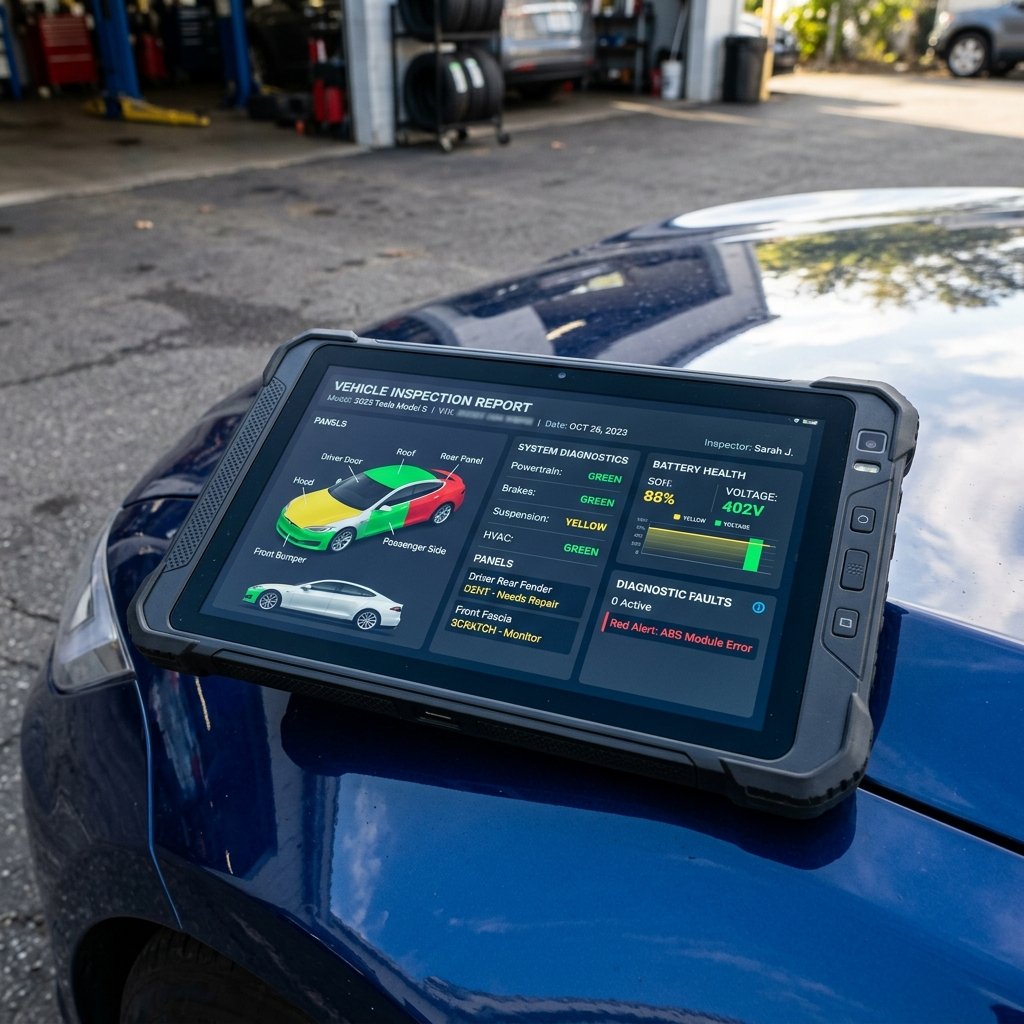
Infographic: The CARROBAAR_Drive Inspection Protocol
A flowchart highlighting our 300+ point quality audit sequence, covering exterior bodywork, engine bays, cabin electronics, and OBD2 diagnostics.
Pre-Delivery Inspection (PDI) FAQs
No, a dealership cannot legally or procedurally refuse a Pre-Delivery Inspection. Manufacturers (like Maruti, Hyundai, Tata, Honda) have explicit policies granting customers the right to inspect their allocated vehicle before invoicing and RTO registration. If a dealer claims "customers are not allowed in the yard due to safety or company policy," it is a major red flag. They may be trying to hide damage or push registered delivery of a defective car. Hold your ground, inform them that you will not release payments or sign RTO forms without a PDI, and contact the manufacturer's regional office if the dealer remains uncooperative.
Your action plan depends on the severity of the issue:
- Minor Issues (Missing clips, light scratches, alignment shifts): Instruct the dealer to resolve the issues (replace trim, install clips, adjust alignment) and verify the corrections before signing registration consent forms.
- Major Issues (Repainted panels, structural chassis issues, engine/gearbox leaks, electrical errors): Formally reject the specific vehicle chassis number (VIN) in writing. Request the dealer allocate a different vehicle from the next incoming batch. Since the car is not registered, the dealer must comply.
Once registered, swapping the vehicle or getting a refund is practically impossible. The RTO links the chassis number permanently to your name in the government VAHAN database. The dealer cannot simply cancel this transaction without declaring the car "used," which would cause them a massive loss. If defects are found post-registration, the dealer is only legally obligated to repair the issue under manufacturer warranty terms. This is why a PDI must be conducted pre-registration.
While a buyer can inspect cosmetic elements, a professional brings two essential assets: specialized equipment and experience-driven knowledge. Average buyers do not own digital coating thickness gauges to detect repaints, OBD2 diagnostic scanners to read system fault codes, or battery analyzers. Furthermore, our inspectors know exactly where to look for hidden transit damage, sagging splash shields, and signs of yard corrosion, saving you from costly mistakes.
Yes, it is highly common. Vehicles often sit in unshaded holding yards for 2 to 4 months. Continuous parasitic drain from modern car electronics (ECUs, security tracking systems) drops the battery voltage below 11.5V, causing lead sulfation. The dealer simply jump-starts the car before handover. The battery functions initially, but its service life is heavily compromised, and it will likely fail within a year. A PDI checks the cold cranking amps (CCA) to ensure the battery is healthy.
A normal odometer reading is between 10 km to 50 km. This accounts for factory testing, driving onto shipping transporters, and local stockyard movements. Any reading above 70 km is a warning sign. It suggests the vehicle may have been used for customer test drives, driven long distances from a distant stockyard due to driver shortages, or used as a dealership runabout.
Dealership body shops employ professional painters who use modern clear-coat blending, wet sanding, and high-speed buffing techniques. Under the low light of showroom delivery bays, these touch-ups look identical to factory paint. However, they cannot fool a digital coating thickness gauge. The manual paint application and underlying body filler (putty) leave a thickness reading that is double or triple the factory micron baseline, instantly flagging the repaired panel.
No, a third-party PDI does not void your warranty. It is a visual, electronic, and diagnostic audit. We do not dismantle parts, modify mechanical components, or alter any ECU code. We plug an OBD2 scanner into the standard port (just as a mechanic would) to read data logs. This is completely non-invasive and does not affect your factory warranty.
The Vehicle Identification Number (VIN) is a unique 17-digit alphanumeric code assigned to every vehicle. It acts as the car's fingerprint. You can find it stamped on a metal plate visible through the driver's side windshield base, on the engine firewall, or on the driver's side B-pillar. The 10th character (or 12th, depending on the manufacturer) indicates the calendar year of manufacture, while another character represents the production month. Decoding this VIN ensures you are not buying a car that has sat in stock for months.
A thorough PDI takes between 1.5 to 2.5 hours. This depends on the size of the vehicle, the complexity of its electronic systems, and the conditions of the inspection location. The process involves systematically checking the bodywork, analyzing paint thickness, inspecting the engine compartment, scanning the OBD2 ports, and performing a functional check of all cabin features.
Don't Take Delivery Blindfolded
Protect your investment before registration. Get a professional, independent PDI report from CARROBAAR_Drive in Anand, Vadodara, Khambhat, and Ahmedabad. Unbiased, commission-free vehicle audits you can trust.